Incident location, Long Island
What Happened
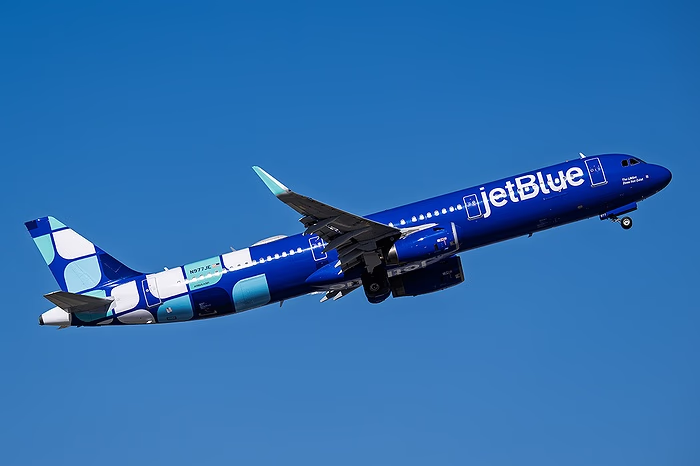
A JetBlue commercial flight inbound from Las Vegas collided with an unauthorized drone while making its approach to John F. Kennedy International Airport on the morning of Monday, June 29, 2026, at approximately 7:15 a.m., according to LongIsland.com. The aircraft was approximately 3,000 feet in the air during its descent when the drone made impact just above the cockpit.
The pilot promptly notified air traffic control at JFK following the strike. In the radio exchange captured and reported by LongIsland.com, the pilot stated: “We collided with a drone back there in the turn as we were coming to ASALT, just wanted to pass to you.” The air traffic controller responded, “You said you collided?” to which the pilot confirmed: “Yup, it hit us, right above the cockpit.” The reference to “ASALT” is understood as a navigational waypoint or approach procedure fix used during the descent into JFK.
Despite the mid-air collision occurring at 3,000 feet, the pilot determined that no emergency measures were necessary, reporting that no serious damage appeared to have been sustained by the aircraft during the strike. The flight was then cleared to continue its approach, and the aircraft landed safely at JFK without incident. No passengers or crew members were reported injured as a result of the collision.
Following landing, JetBlue conducted an inspection of the aircraft. Officials confirmed that the inspection yielded no physical damage to the plane, a result that underscored the pilot’s in-flight assessment. Later in the day, JetBlue issued a formal statement: “Safety is JetBlue’s first priority, and we will assist with any relevant investigations,” according to an airline representative, as reported by LongIsland.com.
The drone involved in the collision had violated JFK Airport’s restricted airspace. The Federal Aviation Administration (FAA) has stated that unauthorized drone flights near airports are illegal under federal regulation. The agency reports receiving more than 100 complaints per month related to drone activity near airports across the country — a figure that highlights the growing frequency of such airspace violations and the ongoing risk they pose to commercial aviation.
The incident occurred during what would have been an otherwise routine weekday morning arrival at one of the busiest airports in the United States. JFK handles hundreds of arrivals and departures daily, and the 7:15 a.m. timeframe places the collision squarely within the airport’s peak morning arrival window for transcontinental red-eye flights from the West Coast.
Location & Road Context
John F. Kennedy International Airport is located in the Jamaica neighborhood of Queens, New York, and serves as one of the primary international gateways for the New York metropolitan area, including Long Island. Its airspace is tightly regulated by the FAA, with multiple designated no-drone zones extending several miles in all directions from the facility. For Long Island travelers and commuters relying on JFK for air connections, the airport is accessible via the Van Wyck Expressway and is closely linked to the region’s broader transportation infrastructure. More information on area road and transit conditions can be found at Long Island Traffic’s roads coverage.
Investigation & Legal Proceedings
The FAA is involved following the reported drone strike, and JetBlue has publicly committed to assisting with any relevant investigations. While no arrests or specific charges against a drone operator have been publicly announced as of the time of this report, the FAA’s involvement signals that the agency will work to identify the source of the unauthorized drone. Under federal law, operating a drone in the restricted airspace surrounding a major airport like JFK is a serious violation that can carry both civil penalties and criminal charges depending on the circumstances. The investigation remains ongoing.