What Happened
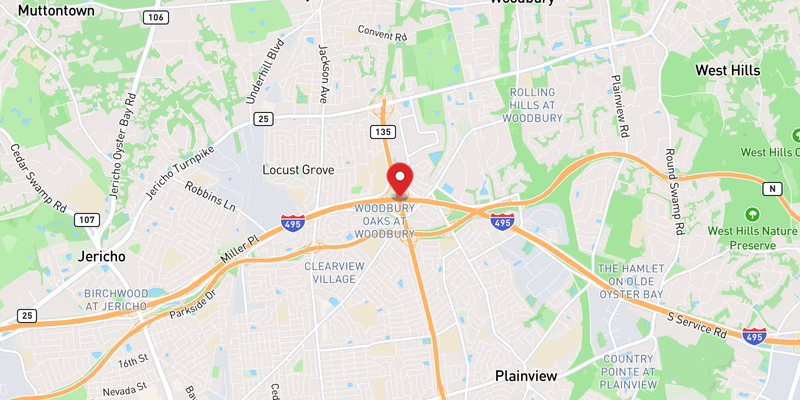
A fuel spill on the eastbound Long Island Expressway (I-495) in Nassau County triggered the closure of two left lanes on Tuesday, June 30, 2026, according to incident records logged in the 511NY traffic management system. The event was classified as a moderate-severity incident, reflecting meaningful lane impact and the associated hazards of fuel on a live highway surface.
The two left lanes of the eastbound LIE in Nassau County were shut down to allow cleanup crews and emergency responders to safely address the spill, per the incident record. The right lanes remained passable, but with two of the expressway’s lanes blocked, eastbound motorists faced significant slowdowns and merging conflicts during what was already a congested travel day. The precise location — including the exit number, mile marker, or nearest cross-street — details remain limited and have not yet been confirmed by the Nassau County Police Department or highway officials.
The vehicle or vehicles responsible for the spill have not yet been publicly identified, and it is not confirmed whether the incident involved a commercial fuel tanker, a passenger vehicle fuel leak, or a cargo truck carrying petroleum products. Police have not yet confirmed whether any injuries occurred in connection with the spill. The full scope of the hazardous materials release — including the volume of fuel involved and whether it reached any drainage or environmental features — also remains unclear pending official statements.
It is worth noting that June 30, 2026, was an exceptionally active day for incidents on the Long Island Expressway corridor. In addition to this fuel spill, a critical bus crash on the Long Island Expressway left two people dead and dozens injured, and a coach bus flipped over in Queens on the same expressway, killing the driver and a passenger. With multiple major incidents compounding on the same corridor on the same date, traffic management resources were stretched across a wide geographic area, potentially affecting response timelines for the Nassau County fuel spill. Whether any of these events were related or sequential in causation has not yet been confirmed by authorities.
The weather and road surface conditions at the time of the spill have not been reported in the available official record. Fuel spills on dry pavement present an immediate friction-reduction hazard for vehicles traveling at highway speeds, while a spill in wet conditions can accelerate spreading across lane surfaces. First responders are typically required to apply absorbent materials and, in larger incidents, may call in specialized hazmat contractors before lanes can be safely reopened.
Location & Road Context
The Long Island Expressway — Interstate 495 — is the primary east-west highway artery running the length of Long Island, from the Queens–Nassau border through Suffolk County to Riverhead. In Nassau County specifically, the expressway carries some of the highest traffic volumes on Long Island, regularly topping peak-hour counts that rank it among the most congested corridors in New York State. Our database records 1,380 incidents on I-495 alone, underscoring the frequency of traffic disruptions on this route. Nassau County accounts for 705 recorded accidents in our local incident database, reflecting its density of roadway activity and population.
Eastbound travel on this section of the LIE is particularly sensitive to lane closures. With limited alternate routes available in the dense Nassau County grid — especially for commuters traveling toward the Suffolk County line — even a two-lane closure can back traffic for several miles within minutes. Motorists seeking relief routes during this closure may have turned to the Northern State Parkway or Jericho Turnpike (NY-25), though those corridors were themselves under stress given the broader incident load on June 30.