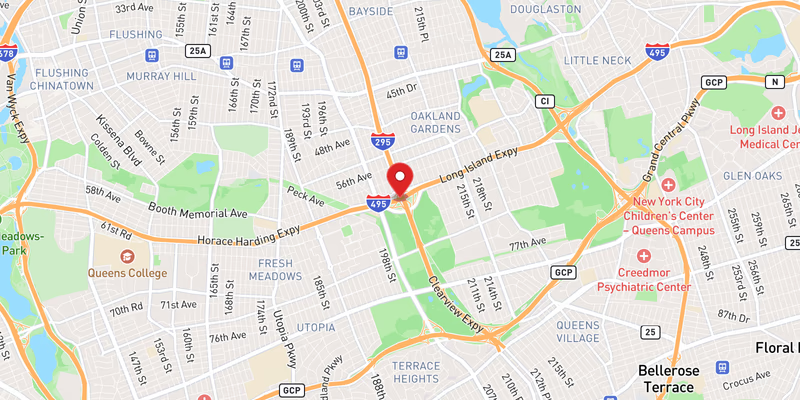
What Happened
A minor crash on the eastbound Long Island Expressway in Queens County prompted the closure of the right lane on Wednesday, July 1, 2026, according to incident data logged in the 511NY traffic management system. The collision was recorded as a minor-severity event, meaning significant injuries or fatalities were not indicated in the initial report.
Beyond the right-lane closure, specific details about the crash — including the exact time it was reported, the number of vehicles involved, the cause of the collision, and whether any occupants were transported to a hospital — remain limited. Authorities have not yet confirmed the names or ages of those involved, and no charges or arrests have been announced in connection with the incident. This article will be updated as additional information is released by police or traffic management officials.
The closure affected the right lane of the eastbound carriageway, a lane that is frequently used by heavy freight and commercial traffic exiting toward the borough’s industrial and warehouse corridors, as well as by commuters heading toward Nassau County and points east. Delays downstream of the closure point would have been likely during the active incident window, though the extent of any backup has not been confirmed.
The crash was one of several disruptions recorded on the expressway on the same day. Also logged on July 1, 2026, were at least two separate disabled vehicle incidents on I-495 and a more serious crash in Yaphank, Suffolk County, in which a driver lost control of a car and went off the LIE — classified as a moderate-severity event. The combination of incidents underscored the level of daily pressure on the expressway corridor.
The prior day, June 30, 2026, saw a critical crash on the Long Island Expressway in which a bus struck multiple vehicles, killing two people and injuring twenty others — one of the most severe multi-vehicle crashes on the LIE in recent memory. That incident, along with multiple other minor crashes recorded on I-495 on June 30, painted a picture of a corridor experiencing an elevated period of incident activity heading into the July 4th holiday week.
Location & Road Context
The eastbound Long Island Expressway through Queens County represents one of the busiest and most crash-prone stretches of highway on Long Island. The I-495 corridor carries hundreds of thousands of vehicles daily, connecting Midtown Manhattan via the Queens–Midtown Tunnel to Nassau and Suffolk Counties to the east, and it serves as the primary surface route for freight, commuter, and long-haul traffic traversing the island. The Long Island Traffic database has recorded 1,417 incidents on I-495 to date, reflecting the expressway’s status as the single most incident-dense road in our regional tracking system.
Queens County accounts for 115 recorded accidents in the Long Island Traffic database — a figure that includes both expressway-related collisions and surface street incidents within the county’s boundaries. The Queens segment of the LIE, while shorter than the Nassau and Suffolk stretches, is particularly vulnerable to rapid traffic backup due to the density of on- and off-ramps, the volume of truck traffic, and the convergence of vehicles merging from the Van Wyck Expressway and other feeders. A single lane closure on the right side — the lane most used for exits and by slower-moving commercial vehicles — can cascade into significant delays within minutes during peak periods.
Broader Impact
This crash fell during the leadup to the July 4th Independence Day holiday weekend, a period that historically sees elevated crash volumes on Long Island’s major expressways as regional travel surges. The New York State Department of Transportation and law enforcement agencies typically increase patrols and messaging around this window. The combination of the Queens crash, the moderate Yaphank rollover, and the prior day’s fatal bus crash on the LIE serves as a stark reminder of the ongoing safety challenges on one of the nation’s busiest interstate corridors — challenges that are well documented in the Long Island Traffic incident archive and by state traffic safety data.