Incident location, Long Island
What Happened
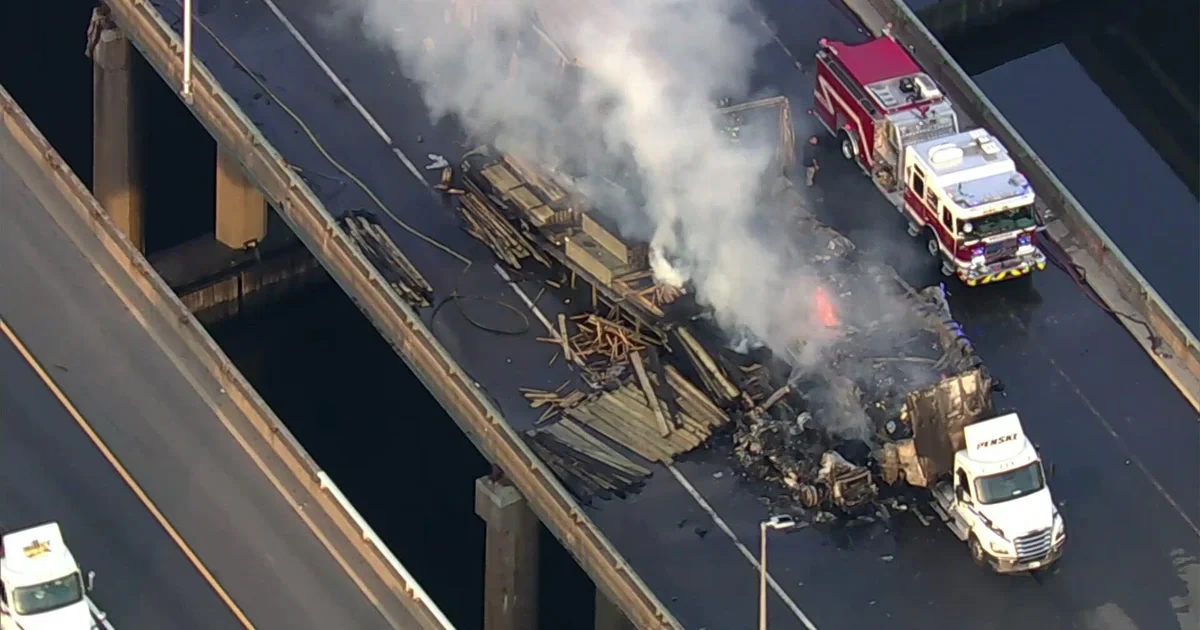
Two semi-trucks collided and burst into flames on the New Jersey Turnpike’s northbound inner roadway just north of Interchange 12 during the Thursday morning commute, triggering major traffic disruptions that stretched for miles and affected regional commuters heading toward the New York metro area, according to CBS New York.
The trucks collided just before 4 a.m. on Thursday, June 25, 2026, per a New Jersey Department of Transportation traffic map cited by CBS New York. The cause of the collision was not immediately established in early reports, and no information on the identities of the drivers or any injuries sustained was available at the time of initial publication. The incident remained a developing story as of the first published reports.
Aerial footage captured by CBS News’s Chopper 2 showed the dramatic scale of the blaze in real time. Lumber on one of the involved semi-trucks was visibly burning, and heavy smoke rose from the crash scene into the early morning sky. The images underscored the intensity of the fire and the complexity of the emergency response required to bring the scene under control.
As a direct result of the crash and fire, all northbound lanes on the turnpike’s inner roadway north of Interchange 12 were shut down entirely, according to CBS New York. Authorities directed all northbound traffic onto the outer roadway as emergency crews worked the scene. The diversion created a significant bottleneck, and delays stretched rearward all the way to Interchange 11, meaning drivers were encountering stop-and-go or stopped traffic for a considerable stretch of the highway.
Compounding the situation, a second separate crash occurred nearby on the other side of the turnpike. Although details of that second incident were limited in initial reports, it was generating rubbernecking delays as drivers on the opposite roadway slowed to observe the fire and emergency response on the northbound inner lanes. The dual-incident scenario created what effectively became a multi-directional traffic disruption on one of the busiest freight and commuter corridors in the northeastern United States.
No information on charges, citations, or formal investigation findings was available at the time of initial reporting. This remained a breaking news situation as morning commute hours approached and crews continued working to extinguish the fire and clear the scene.
Location & Road Context
The crash took place on the New Jersey Turnpike’s northbound inner roadway between Interchange 11 and Interchange 12 — a heavily traveled stretch of I-95 that serves as a primary artery linking central New Jersey with the greater New York metropolitan area. The inner roadway of the turnpike is designated primarily for passenger car traffic, while the outer roadway accommodates both passenger vehicles and commercial trucks, making the presence of semi-trucks on the inner road a notable circumstance that investigators may examine.
For Long Island commuters and freight operators, the New Jersey Turnpike is a critical link to regional distribution networks, Newark Liberty International Airport, and points west and south. Significant disruptions on this corridor — especially those involving lane closures in the northbound direction — routinely send ripple-effect delays across the George Washington Bridge, the Goethals Bridge, and into Staten Island, ultimately affecting travel times for drivers heading into and out of Long Island via the Staten Island Expressway and associated routes. Commuters traveling from Long Island toward New Jersey on the morning of June 25 were advised to use the outer roadway and to anticipate substantial delays. For updates on roads connecting Long Island to this corridor, see our coverage of New York area roads.