What Happened
A vehicle fire closed the right lane on the westbound Long Island Expressway in Suffolk County on Friday, June 5, 2026.
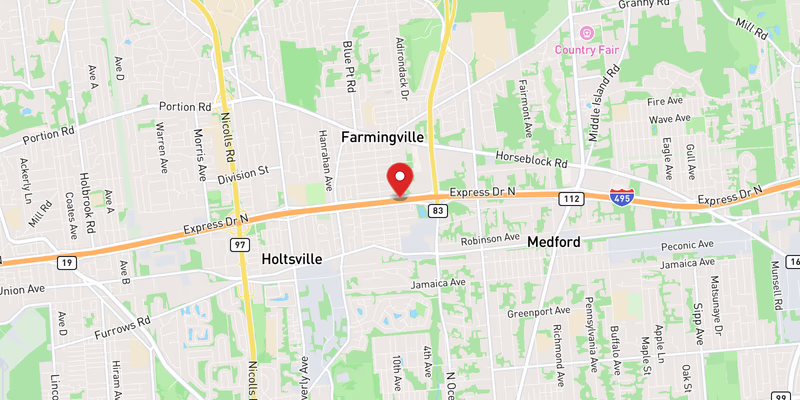
The original traffic record from 511NY listed a vehicle fire on westbound I-495 with the right lane closed. A separate NewsBreak Radar page, generated from public dispatch audio, described the incident as a fully involved vehicle fire on the Long Island Expressway westbound near Exit 64 at approximately 10:07 a.m.
Long Island Traffic is treating the NewsBreak Radar page as dispatch context, not as a final official report. NewsBreak Radar itself warns that its pages are AI-generated from live dispatch audio and are not official agency findings. The useful detail is that the dispatch summary adds a likely exit reference and severity description — “fully involved” — to a 511NY record that otherwise reads like a generic lane-closure item.
No fatalities or serious injuries were reported in the available traffic record. The vehicle type, occupant information, fire department response time, and cause of the fire have not been confirmed in a public agency release reviewed by Long Island Traffic.
Why Exit 64 Matters
Exit 64 sits in the central Suffolk stretch of the Long Island Expressway, a corridor that carries weekday commuter traffic, commercial vehicles, local trips, and East End-bound traffic depending on the time of day. A westbound right-lane closure in this area can slow traffic well beyond the immediate shoulder because drivers tend to brake for smoke, emergency vehicles, and visual obstruction even when only one lane is formally closed.
Vehicle fires create a different hazard profile than ordinary disabled vehicles. A fully involved fire can produce smoke across travel lanes, leave debris or fluids on the pavement, and require fire apparatus to stage in or near the roadway. Even after flames are knocked down, responders may need time to cool the vehicle, check for re-ignition, and clear fire-suppression residue from the travel lane.
What Drivers Should Do Near a Vehicle Fire
Drivers approaching any active vehicle fire on I-495 should treat the scene as an emergency work zone:
- slow before reaching the smoke or emergency lights;
- move over if safe and legally possible;
- avoid stopping to film from an active lane;
- leave extra space for fire apparatus, police and tow operators;
- expect sudden braking from drivers reacting to smoke or flames.
New York’s Move Over Law requires drivers to slow down and, where safe, move over for stopped emergency and hazard vehicles. That rule matters especially on the LIE, where responders often have only a narrow shoulder and fast-moving adjacent traffic.
Broader I-495 Context
This June 5 fire was one of several I-495 disruptions in the same early-June period. Long Island Traffic records show a separate disabled tractor-trailer on I-495 that day, plus multiple crashes, disabled vehicles, roadwork and construction events on the expressway in the surrounding week.
For commuters, the lesson is not that every vehicle fire becomes a major incident. It is that even a short right-lane closure can create outsized delay when it happens on a high-volume limited-access road with limited alternate routes.
This report was updated June 14, 2026, after review of a NewsBreak Radar dispatch-audio summary that added the Exit 64 and “fully involved” context to the original 511NY lane-closure record.